How Much Does Land Cost in Ibadan in 2026? Prices by Area, Plot Size, and What Buyers Should Know
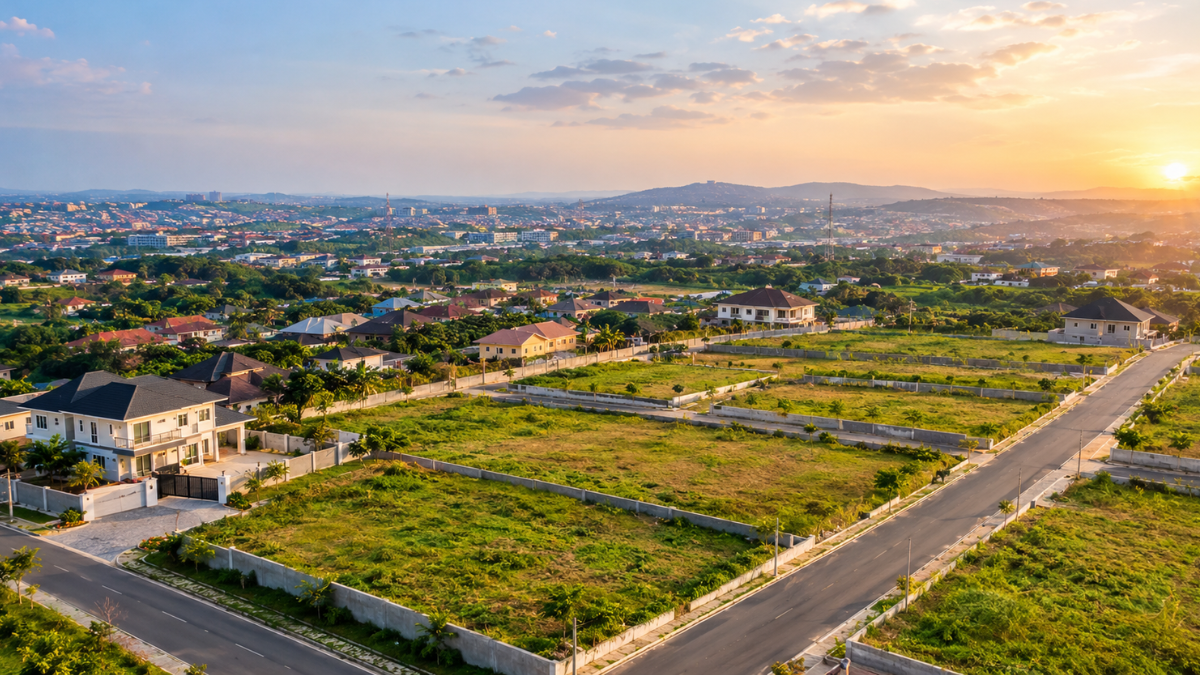
Looking for land in Ibadan? Start With the Price Reality
You've probably seen them.
“Affordable land in Ibadan.”
“Own your plot today.”
“Land for just ₦2 million.”
Then you check another property, and suddenly you're looking at ₦10 million, ₦20 million, or much more.
So, which price is actually realistic?
The answer is all of them can be real.
Land prices in Ibadan vary widely depending on the area, plot size, title, accessibility, infrastructure, and the type of development surrounding the property.
According to Nigeria Property Centre's Q3 2026 market report, the median asking price for land per plot in Ibadan was ₦4 million, based on 140 listings. The listings ranged from about ₦350,000 to ₦180 million.
That huge range tells you something important:
There is no single “Ibadan land price.” The better question is what your budget can realistically get you—and where.
What Does ₦5 Million Buy You in Ibadan?
Let's make this practical.
If your budget is around ₦5 million, you may find plots within or around that range in some developing areas.
Current listings on Nigeria Property Centre include examples around:
- ₦2.1 million for 300 sqm
- ₦3.5 million for 500 sqm
- ₦4 million for plots around 557–577 sqm
- ₦5 million and above in other locations
- Higher prices in more established or sought-after areas
These are asking prices, not confirmed prices at which properties actually changed hands.
And that's important because online property listings aren't a price list for the entire city.
A ₦5 million plot could be a good fit for one buyer and completely unsuitable for another.
The difference usually starts with where the land is and what comes with it.
You can view current residential land listings in Ibadan on Nigeria Property Centre to get a feel for the range currently being advertised.
What About ₦10 Million?
This is where the options can start looking quite different.
A ₦10 million budget could put you within reach of different plot sizes and locations, depending on the property.
For example, Elysium currently lists 300 sqm at ₦9 million at Gbajumo's Court in Ajoda New Town, while a 500 sqm plot is listed at ₦15 million. The development also offers an initial deposit of ₦1 million for the 300sqm option and ₦2 million for the 500sqm option, with payment spread over 1–6 months.
See Gbajumo's court current prices and payment plan.
This gives you a useful comparison.
You aren't simply asking:
“How much is a plot in Ibadan?”
You're asking:
“How much does a particular size of plot cost in a particular development, and what am I getting for that price?”
That's a much more useful way to shop for land.
300 sqm vs. 500 sqm: Which One Makes More Sense?
If you're buying land for the first time, the difference between 300 sqm and 500 sqm may seem like a simple size question.
It isn't.
A 300 sqm plot may make sense for someone looking to build a compact home while keeping the initial purchase cost lower.
A 500 sqm plot gives you more space and may provide greater flexibility for your building plans, depending on planning requirements and the type of property you intend to develop.
But don't assume that a larger plot automatically represents better value.
For example, paying more for 500 sqm in a location that doesn't suit your plans may make less sense than buying a smaller plot in a location that works for you.
Before choosing your plot size, ask:
- What do I want to build?
- How much space will I actually need?
- Am I buying now to build immediately or later?
- What is my total budget, not just my land budget?
The right plot size is the one that fits the property you actually intend to own.
Where Is Land in Ibadan More Affordable?
This is where many buyers get stuck.
They search for “best area to buy land in Ibadan," expecting one straightforward answer.
Real estate doesn't really work that way.
Some locations have lower asking prices because they are still developing. Others command higher prices because of established communities, accessibility, demand, or surrounding development.
Current Nigeria Property Centre data shows property-search activity across areas including Moniya, Akobo, Jericho, Samonda, Apata, New Bodija, Agodi, Iyaganku, and Ologuneru.
But here's the part buyers sometimes miss:
A popular search area isn't automatically the right area for you.
Someone looking for land to build a family home may have completely different priorities from someone buying land to hold for several years.
So rather than asking only
“Which area is cheapest?”
Ask: access,
“Which area gives me the combination of price, access, and development that fits what I want to do?”
Why Are Some Plots So Cheap?
This is probably one of the most important questions to ask.
You see a plot advertised for ₦2 million, while another similar-looking plot is ₦10 million.
Naturally, you wonder why.
Sometimes the explanation is straightforward: the cheaper property is in a less-developed area.
But price differences can also be connected to:
- Location
- Road access
- Plot size
- Title and documentation
- Infrastructure
- Development around the property
- Demand
- Distance from established neighborhoods
- Additional charges
So don't let a low price make the decision for you.
Cheap land isn't automatically a bad deal. Expensive land isn't automatically a good deal either.
The important thing is understanding what you're actually buying.
The Price on the Advert Isn't Always Your Final Cost
This is another part of land buying that is easy to overlook.
When someone says:
“The land is ₦5 million.”
You should immediately ask:
“What else will I have to pay?”
Depending on the transaction, there may be costs associated with things such as documentation, surveying, legal services, registration, or development-related charges.
The exact costs will depend on the property and transaction, so don't assume they're included in the advertised land price.
Before making a payment, ask for a full breakdown of the costs.
That way, you're budgeting for the actual purchase rather than just the headline price.
Before You Pay for Land, Check These 7 Things
This is where you should slow down.
A beautiful estate entrance, convincing salesperson, or attractive price is not enough.
1. Who owns the land?
Find out who legally owns the property and whether the person or organization selling it has the authority to do so.
2. What documentation is available?
Ask to see the relevant property documents and have them properly reviewed and verified.
3. Where exactly is the land?
Don't rely solely on an estate name or a WhatsApp location pin.
Know the actual location and inspect the property where possible.
4. Can you access it easily?
Visit the property and look at the roads leading to it.
A plot that looks affordable on paper may become less attractive if access is difficult.
5. What is happening around it?
Look beyond the boundary of the property.
Are homes being built nearby? Are roads improving? Are businesses, schools, or other developments appearing?
6. What infrastructure is already there?
Don't confuse “planned” infrastructure with infrastructure that has actually been delivered.
Ask what exists today and what is still proposed.
7. What exactly do you receive after payment?
Understand the allocation process, documentation, payment milestones, and what happens after you complete the purchase.
What If You're Buying From Outside Nigeria?
For Nigerians living abroad, the biggest challenge may not be finding land.
It may be verifying what you're buying without being physically present.
If you're buying from the UK, US, Canada, UAE, or elsewhere, don't let distance push you into making a rushed decision.
Ask:
- Who is selling the property?
- Who verifies the documents?
- Can someone inspect the land for you?
- What are the payment milestones?
- What documents will you receive?
- Who handles the transaction locally?
You should be able to understand the purchase process before sending your money.
Remote buying should still involve real verification.
One Example: What Does a Structured Land Purchase Look Like?
For buyers specifically considering a serviced residential development, Gbajumo's Court provides one current example of how land can be packaged differently from a bare plot.
Located in Omituntun Estate, Ajoda New Town, along Old Ife Road, the development is presented by Elysium as a planned residential estate developed in partnership with the Oyo State Housing Corporation. Elysium says infrastructure is delivered before plot handover and lists paved roads, drainage, water infrastructure, street lighting, and CCTV among the estate's features.
Current published prices are
300 sqm—₦9 million, 500 sqm—₦15 million
with initial deposits of ₦1 million and ₦2 million, respectively. Payment can be spread over 1–6 months.
Explore Gbajumo's Court in Ibadan.
The point isn't that every buyer needs this particular type of development.
It's that two plots with the same size can offer very different buying experiences depending on the infrastructure, documentation, and process attached to them.
So, How Much Should You Budget for Land in Ibadan?
If you're planning your purchase, don't start with a single number.
Start with a range.
For example:
Under ₦5 million: You may find options in developing areas, but you'll need to pay close attention to location, title, access, and what is included.
Around ₦5–₦10 million: You may have more options across different locations and plot sizes, depending on the property.
₦10 million and above: You may begin looking at larger plots, more developed locations, or structured developments, but prices can still vary considerably.
These aren't fixed market brackets. They're simply a practical way to begin your search.
The actual property, location, and terms matter more than the budget label.
Is Ibadan Land Still Worth Looking At in 2026?
That depends on what you're buying and why you're buying it.
Ibadan has a large and varied property market, and current data shows significant activity from people searching for property in the city. Nigeria Property Centre recorded 3,697 sale searches between September 17 and September 30, 2026, with a typical stated maximum search budget of ₦107.1 million.
That doesn't mean every property will perform the same way.
It simply shows that there is active buyer interest across the market.
If you're considering Ibadan because you're priced out of a particular location elsewhere, looking for land to build on, or simply exploring property ownership, the next step shouldn't be to buy the cheapest plot you find.
It should be to compare properties properly.
If you're also researching the wider Ibadan property market, you can read Elysium's earlier guide, Lagos vs Ibadan Property Investment in 2026, for a broader look at the two markets.
SUMMARY
So, how much does land cost in Ibadan in 2026?
A useful starting point is the ₦4 million median asking price per plot reported by Nigeria Property Centre for Ibadan in Q3 2026, but that number is only a starting point. Current listings span a very wide range depending on location and property characteristics.
If you're shopping for land, don't let the cheapest advert determine your budget.
Decide what you need first.
Your budget. Your plot size. Your location. Your purpose. Your timeline.
Then compare properties based on what you're actually getting.
Because when it comes to land, the question isn't simply
“How much is it?”
It's:
“What am I getting for my money, and can I verify it?”
FREQUENTLY ASKED QUESTIONS
1. How much is land in Ibadan in 2026?
Nigeria Property Centre's Q3 2026 report puts the median asking price for land at ₦4 million per plot in Ibadan, based on 140 listings. However, actual asking prices vary considerably by location, plot size, and property type.
2. How much is 300 sqm of land in Ibadan?
There is no city-wide fixed price for 300 sqm. The location and development make a significant difference. For example, Elysium currently lists a 300 sqm plot at Gbajumo's Court for
₦9 million.
3. How much is 500 sqm of land in Ibadan?
Prices vary significantly across the city. At Gbajumo's Court, Elysium currently lists a 500 sqm plot at ₦15 million.
4. What should I check before buying land in Ibadan?
Verify ownership and documentation, inspect the location, check accessibility and infrastructure, investigate possible disputes, and understand all costs and payment terms before making a commitment.
5. Can Nigerians abroad buy land in Ibadan?
Yes, but remote buyers should take extra care with document verification, property inspection, payment arrangements, and the people handling the transaction locally.
Comments
0Share your thoughts, ask questions, or join the discussion.
Leave a comment
No comments yet
Be the first to share your perspective, experience, or ask a question!